On sites involving diaphragm walls, drilling, geothermal works, special foundations or tunnelling, the management of excavated material is a major technical, logistical, economic and environmental challenge.
High moisture content, slurry consistency, limited site space, transport constraints and acceptance criteria at treatment facilities can quickly complicate operations. To ensure fast, safe and compliant disposal, APROTEK supports contractors from the earliest stages of the project with on-site testing and high-performance solutions for dewatering and solidifying excavated material.
APROMUD®: a High-Performance Solution for Sludge Dewatering and Solidification
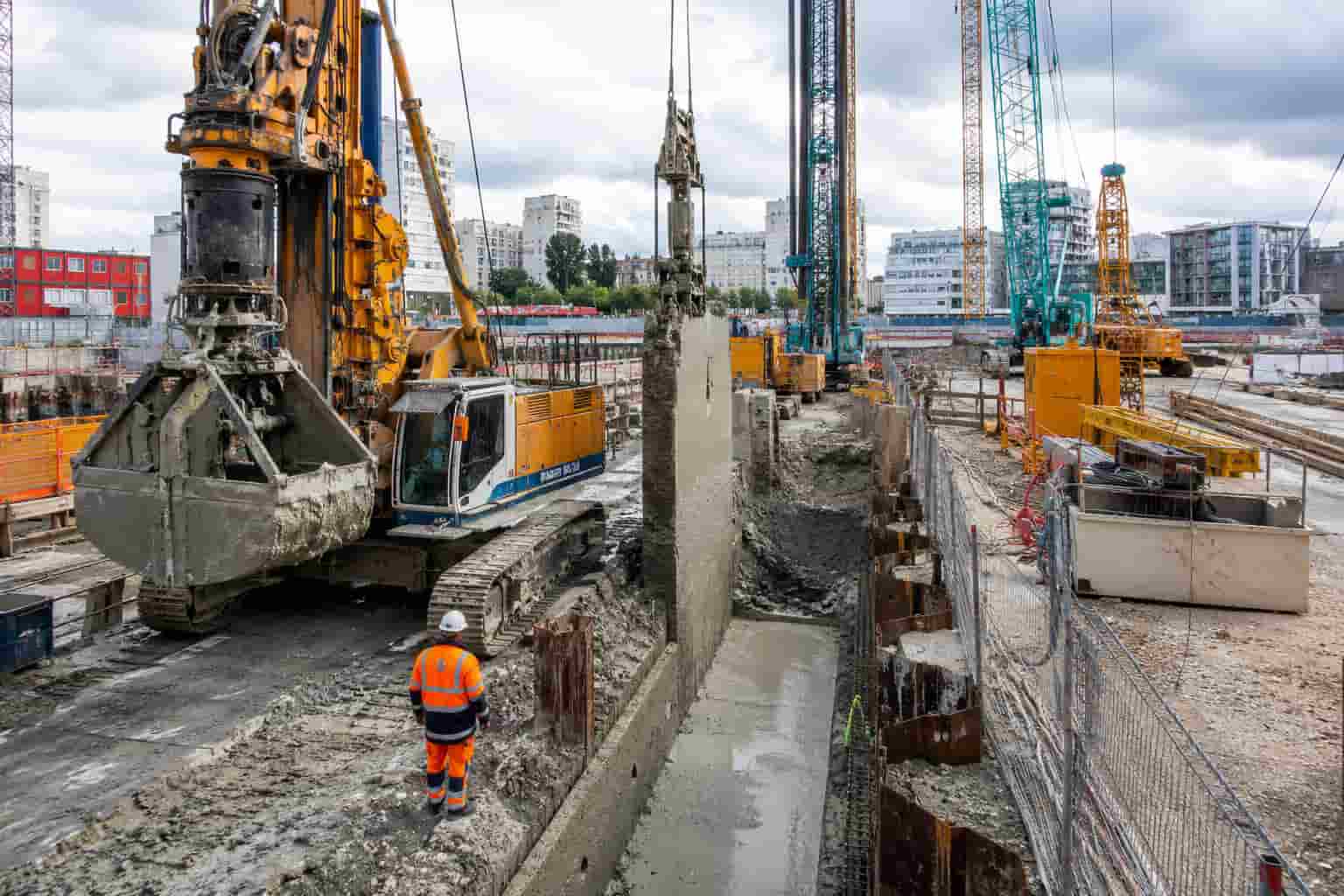
APROMUD® is a super-dewatering agent specially developed for the treatment of sludge and excavated material generated by civil engineering works, diaphragm wall construction, drilling, special foundations, geothermal projects and tunnel boring machines.
Thanks to its high absorbency, APROMUD® rapidly transforms liquid or paste-like spoil into a solid, stable and easily manageable material. This improves handling conditions, reduces loading difficulties, limits the risk of spillage during transport and facilitates acceptance at treatment or disposal facilities.
Available in different packaging formats, APROMUD® can be adapted to the specific requirements of each site. It provides contractors with a reliable solution to optimise spoil management while keeping operational costs under control.
On-Site Testing to Define the Right Treatment Strategy
Before each operation, APROTEK carries out site trials to validate the most appropriate technical approach.
These tests make it possible to:
- identify the most suitable APROMUD® grade;
- define the optimal dosage according to the characteristics of the sludge;
- select the most appropriate packaging;
- validate performance under real site conditions;
- estimate treatment and disposal costs accurately;
- prepare future operations on a sound technical and economic basis.
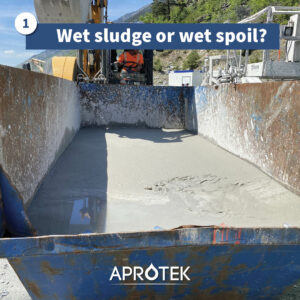
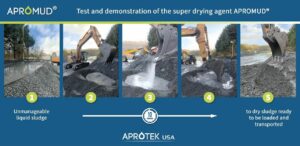
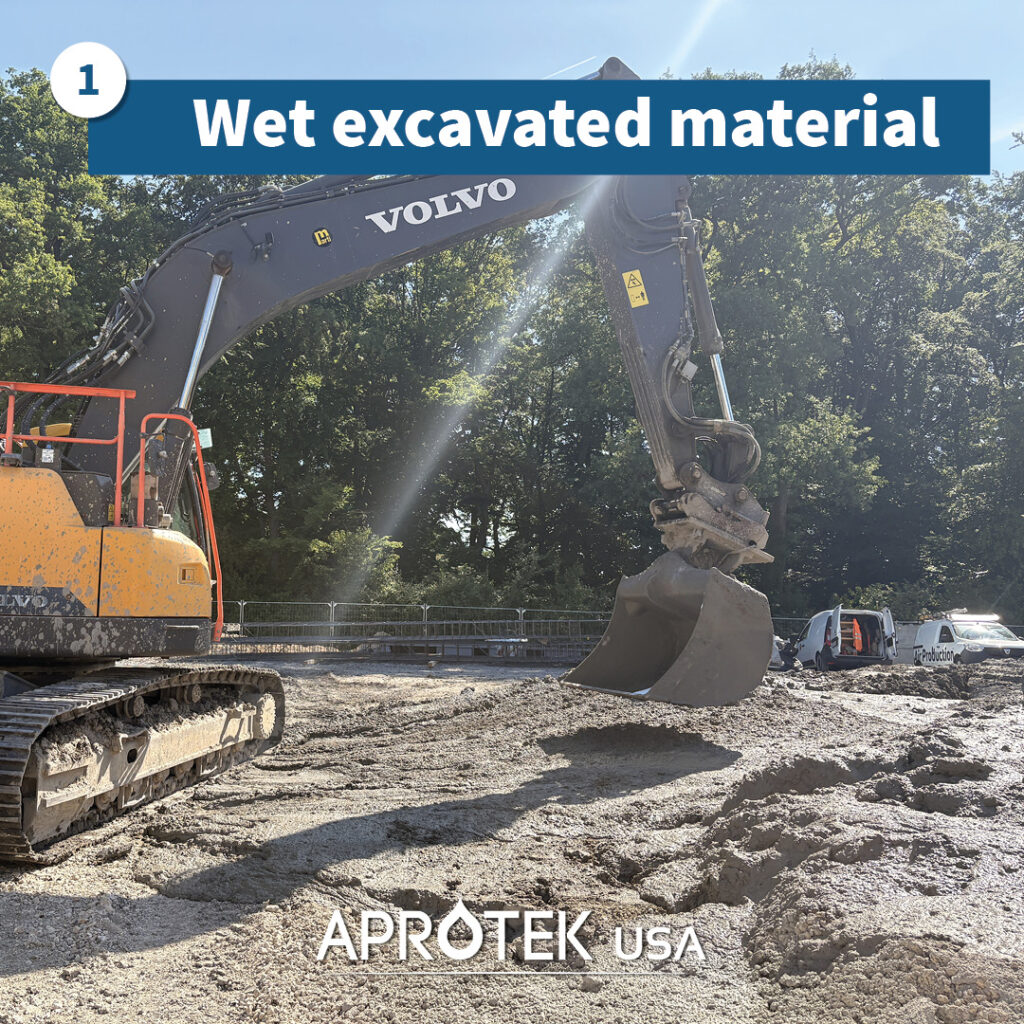
Step 1: Liquid Excavated Material That Is Difficult to Dispose Of
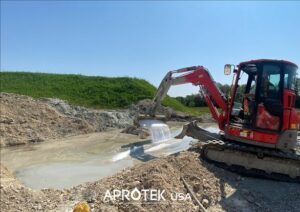
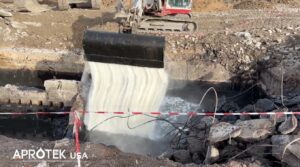
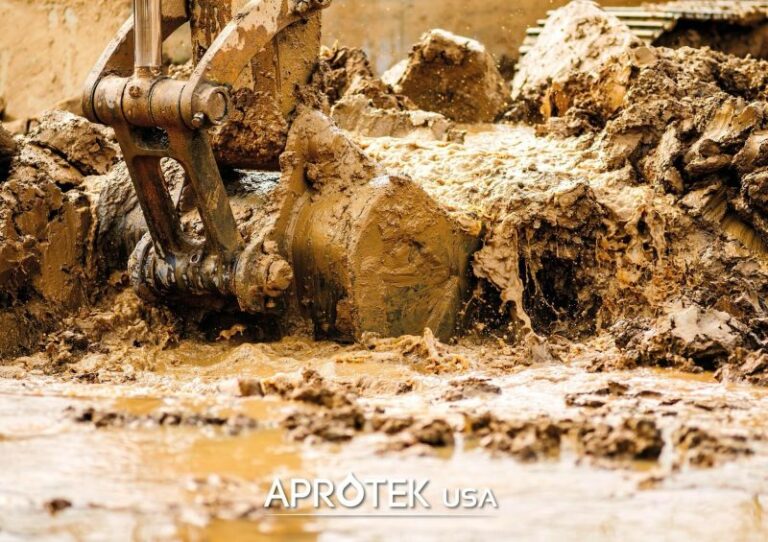
During diaphragm wall construction, excavated material often contains a high proportion of water. This liquid or paste-like slurry is difficult to load, increases the risk of spillage during transport and may be rejected by treatment or disposal facilities.
On this site, approximately 120 m³ of wet spoil had to be treated quickly in order to maintain the pace of operations and reduce disposal-related costs.
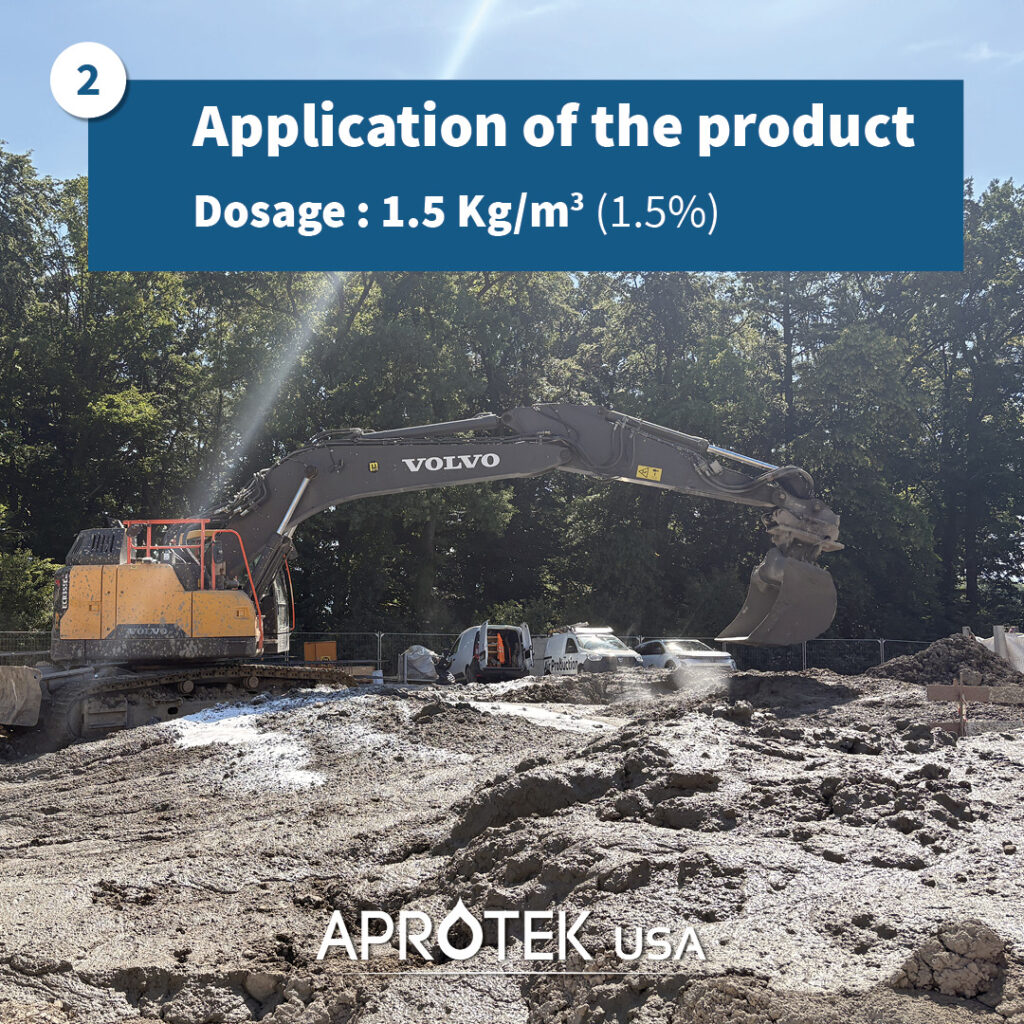
Step 2: Application of APROMUD® Super-Dewatering Agent
After analysing the characteristics of the excavated material, APROTEK selected APROMUD® G350, supplied in 25 kg bags.
This grade was chosen for its suitability to the site conditions and the consistency of the slurry. The product was spread directly onto the excavated material to ensure uniform treatment and optimum efficiency.
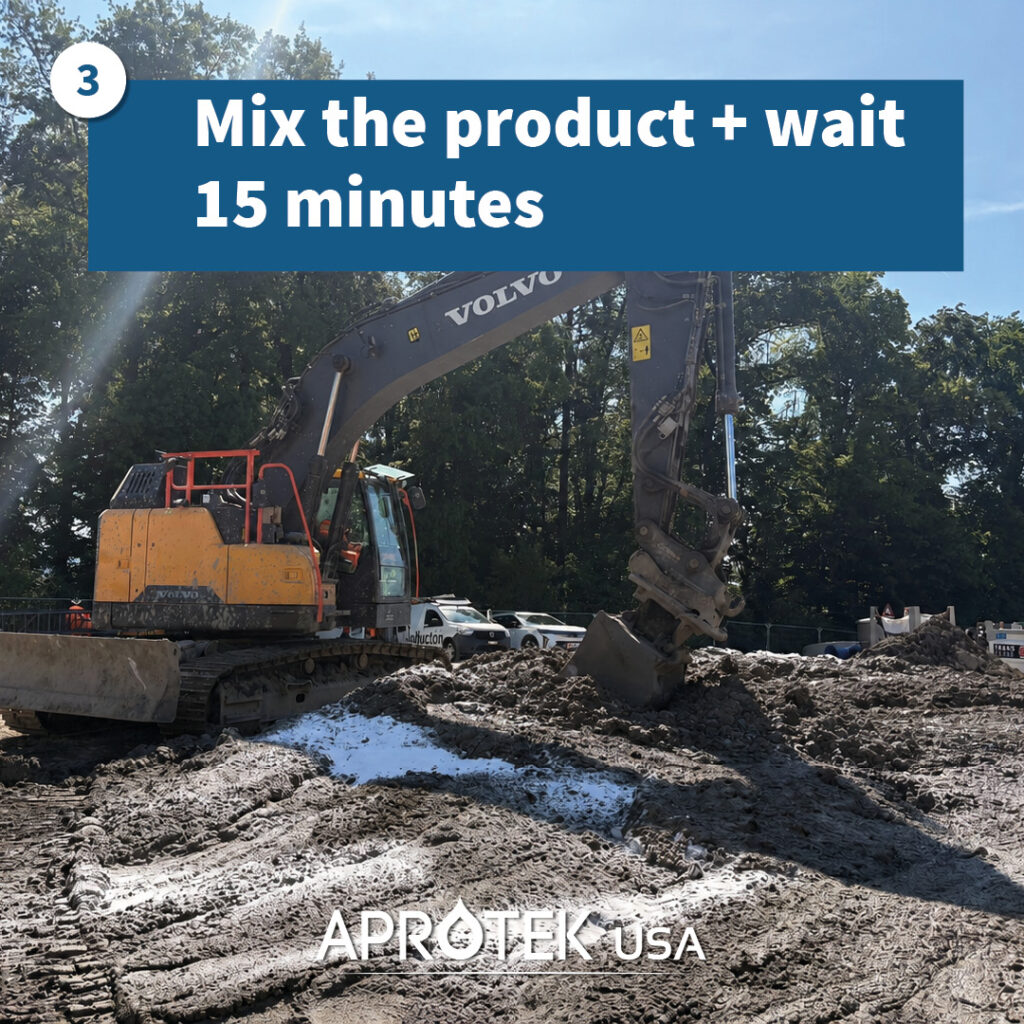
Step 3: Mixing and 15-Minute Reaction Time
Once APROMUD® had been applied, the excavated material was mechanically mixed to ensure proper contact between the super-dewatering agent and the slurry.
After approximately 15 minutes, the treatment significantly reduced the moisture content, improved the cohesion of the material and enabled effective solidification. This step is essential to make the treated material easier and safer to handle.
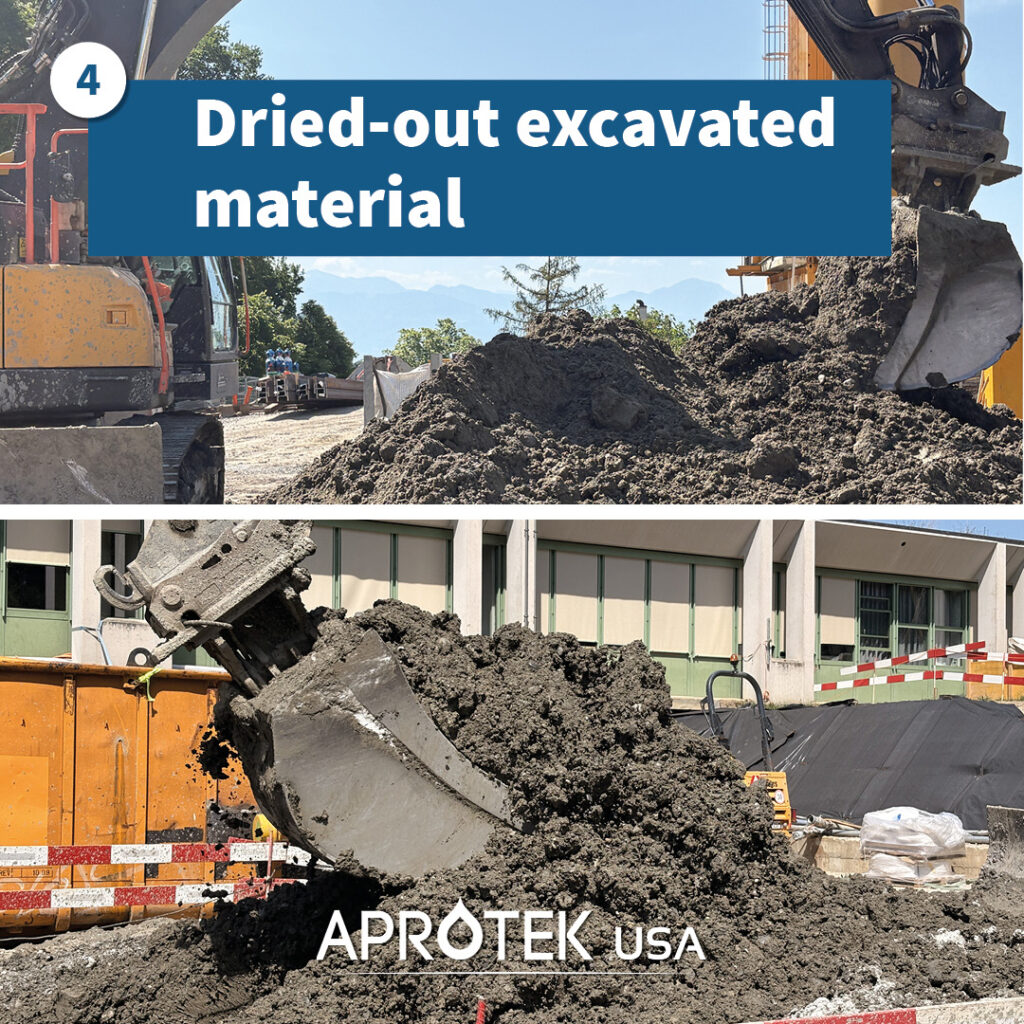
Step 4: Solid, Stable and Easy-to-Handle Material
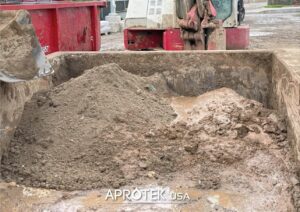
After treatment, the excavated material reached a much more stable consistency. It could be collected using a backhoe, loaded onto trucks without spillage and handled safely on site.
This rapid transformation improves site productivity and reduces interruptions linked to slurry management.
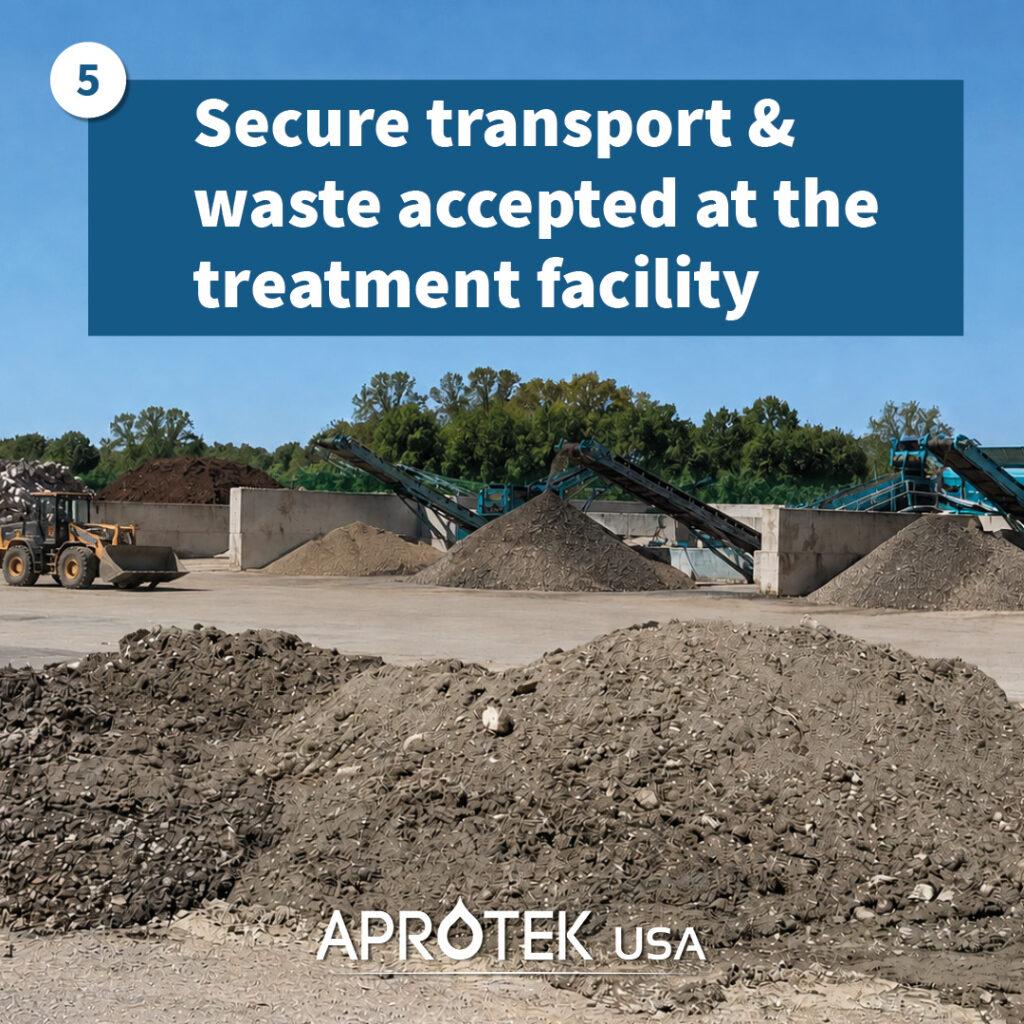
Step 5: Safer Transport and Improved Acceptance at Treatment Facilities
Once treated with APROMUD®, the excavated material is easier to transport and more likely to meet the acceptance requirements of inert waste treatment or storage facilities.
The risk of rejection is reduced, logistics are simplified and transport operations become safer. This enables civil engineering, drilling, tunnelling and specialist foundation contractors to better control disposal timescales and costs.
Technical Support Beyond Product Supply
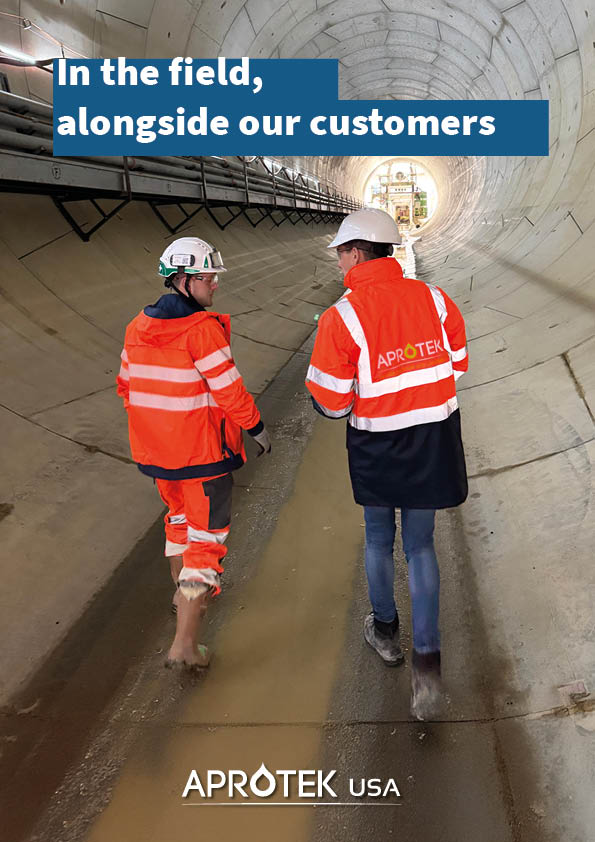
APROTEK does more than supply a high-performance dewatering agent. Our teams support each client throughout the project to identify the most effective solution according to the characteristics of the excavated material, site constraints and economic objectives.
Our approach is based on real-world testing, dosage recommendations, technical monitoring during operations and continuous performance optimisation.
This ensures reliable and reproducible slurry treatment, perfectly adapted to diaphragm wall works, drilling, tunnel boring, geothermal projects and special foundations.
A More Responsible Approach to Excavated Material Management
Optimising sludge dewatering directly contributes to reducing the environmental impact of construction sites.
By improving the consistency and quality of excavated material before removal, contractors can reduce transport-related risks, improve waste stream management and facilitate disposal through appropriate channels.
This approach reflects APROTEK’s commitment to more sustainable construction, better resource management and a reduced environmental footprint for civil engineering, drilling, geothermal and specialist works.
Have Your Site Assessed
Every site has its own technical constraints. That is why APROTEK offers on-site testing to determine the most effective APROMUD® solution for your excavated material.
Are you planning a project involving diaphragm walls, drilling, tunnel boring, geothermal energy or special foundations?
Contact APROTEK’s technical teams to benefit from personalised support and optimise the management, dewatering and solidification of your slurry and excavated material from the very start of your project.